When Rosemary Outlasts the Cheese
A herb cracker changes the end of a bite more than its beginning. Cheese aroma fades as the fat clears; resinous herbs and toasted seeds keep going. Knowing which ingredients linger, and for how long, is how you decide whether a flavoured biscuit belongs beside a particular cheese.
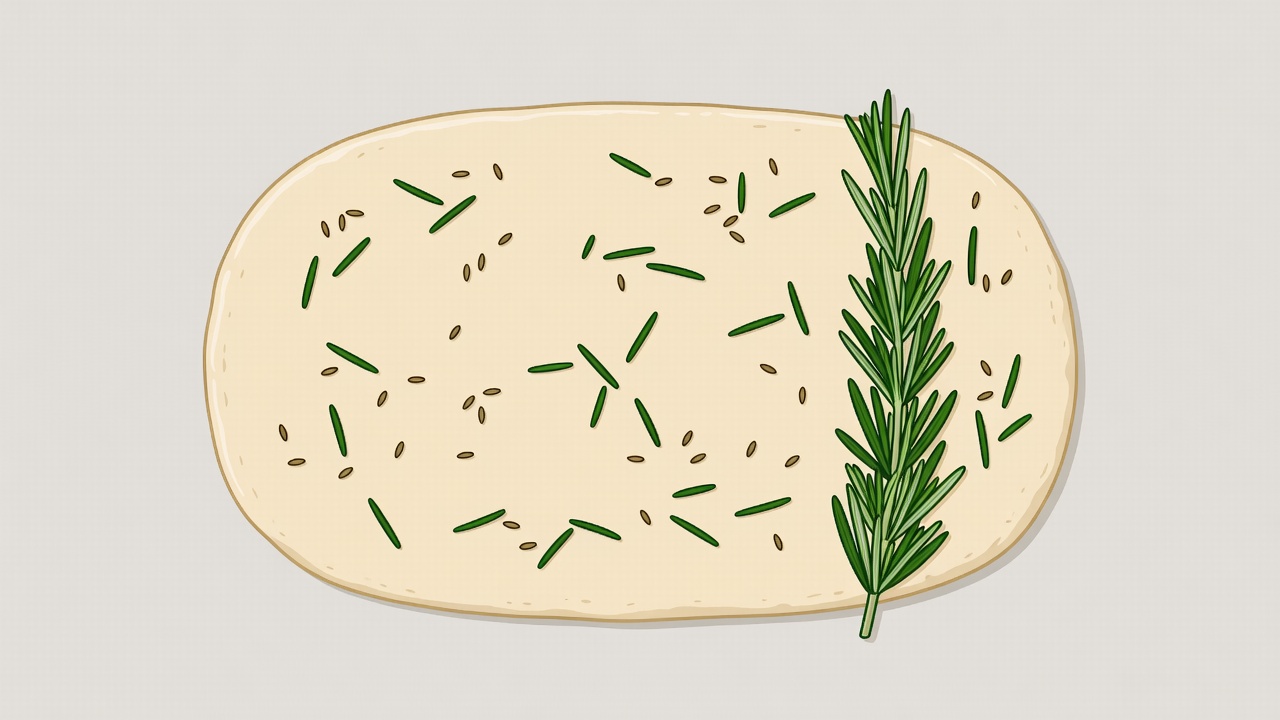
Six flavourings and how long they stay
- Rosemary. Pine and camphor. The longest finish of the common herbs; can outlast a fresh cheese entirely.
- Thyme. Warm and savoury, from thymol. Shorter than rosemary and friendlier to mild goat's cheeses.
- Fennel seed. Sweet anise from anethole. Pairs with salty sheep's cheese and cured meats.
- Caraway. Carvone gives its rye-bread smell. Long, slightly bitter, at home with washed rinds.
- Nigella. Peppery, faintly oniony and bitter. Short finish, clean against fresh cheese.
- Sesame. Nutty once toasted; the aroma builds in the oven. Medium finish, good with aged Gouda.
Why some aromas stay longer
Most of what we call flavour is smell, and much of it reaches the nose from inside the mouth as we chew and swallow. Cheese aroma is carried largely in its fat, and it fades as that fat clears from the palate. Herb and seed aromas come from volatile oils that cling to the mouth in their own way. Rosemary's character comes from compounds including 1,8-cineole and camphor, which are robust enough to survive baking and persistent enough to linger. Delicate leafy herbs such as basil, chervil or chives lose most of their aroma in a hot oven, which is why they appear on fresh crackers as a garnish rather than in the dough. When choosing a flavoured biscuit, ask how long its finish is compared with the cheese's.
Rosemary, used deliberately
Rosemary crackers are popular because the herb survives the oven so well. That same staying power is the risk. With a fresh goat's cheese or a young mozzarella-style cheese, the rosemary is still there when the cheese has gone, and the overall impression is of herb. With an aged pecorino, a firm Manchego or a mature Alpine cheese, the balance is better: these cheeses have savoury depth that holds its own. How the herb is cut matters too. Finely chopped needles distribute evenly and read as background; whole needles create sudden, sharp bursts. Fresh rosemary is more resinous than dried, which can taste dusty.
Fennel and the anise family
Fennel seed gives Apulian taralli their signature smell. Its main aromatic compound, anethole, is shared with anise and star anise, and it reads as sweet even though the seeds contain little sugar. That perceived sweetness is useful beside salty cheeses: ricotta salata, pecorino, feta. The seeds stay whole in most taralli, so the flavour arrives in pops as you bite into them. Lightly toasting the seeds before they go into the dough rounds their sharpness, a step many home bakers use.
Caraway, cumin and spiced cheeses
Caraway owes its rye-bread smell largely to carvone, and it appears in Scandinavian and central European crispbreads. Some cheeses already contain seeds. Leyden cheese from the Netherlands is made with cumin, and Swedish kryddost is spiced with caraway and cloves. With these, a plain biscuit is the clearer choice; adding a seeded cracker doubles the spice and blurs it. With unspiced washed-rind cheeses such as Munster, a caraway crispbread offers the earthy counterpoint that Alsatian serving habits have long favoured.
Nigella, sesame and poppy
These small seeds work as much through texture as aroma. Nigella, sometimes sold as kalonji or black onion seed, is peppery and faintly bitter with a short finish; it cuts the creaminess of fresh cheese without lingering. Sesame tastes of little raw but develops a toasted, nutty smell as it browns in the oven, so crackers with sesame on the surface taste more of it than those with sesame inside. Poppy seeds give a fine, gritty crunch and a mild nuttiness. Sesame is a declared allergen in the UK, the EU and the United States, so label it on a shared board.
Flour is a flavour too
Plain white wheat flour makes a neutral biscuit. Wholemeal brings bran, which adds slight bitterness and a nuttier finish. Rye is sour and earthy, especially in crispbreads made with sourdough. Spelt sits between wheat and wholemeal with a sweeter note. Oats, used in oatcakes, taste toasty and faintly sweet once baked, partly thanks to browning reactions on the surface. Before adding herbs to a biscuit, consider that the flour may already be providing the second flavour the cheese needs.
Butter, olive oil and lard
Fat shortens dough, making biscuits more tender, and carries fat-soluble aromas. Butter brings dairy sweetness, which can double up pleasantly with mild cheese or crowd a rich one. Olive oil, used in taralli and many Mediterranean crackers, adds fruitiness or pepperiness depending on the oil, and gives a harder, crisper crunch. Lard, traditional in Neapolitan taralli, gives a short, crumbly texture and a savoury depth. Water biscuits use very little fat, which is why they snap so cleanly and taste so plain.
Salt in the dough or on the surface
Salt mixed into the dough seasons the whole biscuit evenly and is barely noticed as salt. Flakes scattered on top, such as fleur de sel from Guérande or other flaky sea salts, dissolve on the tongue first and create bright, sudden hits. That works with mild, sweet cheeses and against salty ones. If you bake your own crackers, try a batch with salt only in the dough and another with a light surface sprinkle, and taste both with the same cheese. The difference is larger than most people expect.
Herb biscuits against cheeses of different strength
Fresh
Rosemary cracker with fresh goat's cheese
Herb dominates from mid-bite to finish. Try thyme or nigella instead for a shorter herb note.
Brined
Fennel taralli with feta
Anise sweetness tempers the brine; the two finish together.
Washed rind
Caraway crispbread with Munster
Earthy seed meets meaty rind. A long, deliberate finish.
Aged hard
Sesame cracker with aged Gouda
Toasted sesame echoes the cheese's roasted notes; neither one disappears.
Biscuits and cheeses contain common allergens including wheat, milk and sesame, and recipes vary between makers. Check labels and ask guests about allergies before serving.
For how these flavours behave in a full pairing, read when a cracker should get out of the way.